About the Community

About Obinofia Ndiuno

A people named after the jungle — the story of a community’s name, its roots in one ancestor, and the villages and neighbours that grew from them.

Meaning of the Name “Obinofia”

According to the community’s historical account, Obinofia is a praise name given in derision to Agueze by their father, following his adventurous wild life as a celebrated hunter and farmer. He shied away from his domestic responsibilities, which attracted complaints and protests from step-brothers and others within the household.

Whenever Mba or their step-brother Naa complained about Agueze and his neglect of domestic chores, their father would wave it away, joking:

“Leave that O bu n’ofia” — (jungle dweller) — connoting his son’s adventurous life.

With time, the whole family began referring to Agueze jokingly as “O bu n’ofia”. The name became Obinofia. Drawing on the same name, the community’s opening poem hails the land: “This is Obinofia Ndiuno, a name ever dear to me.”

Source: Obinofia Ndiuno Historical Archive, Book, pp. 12–13.
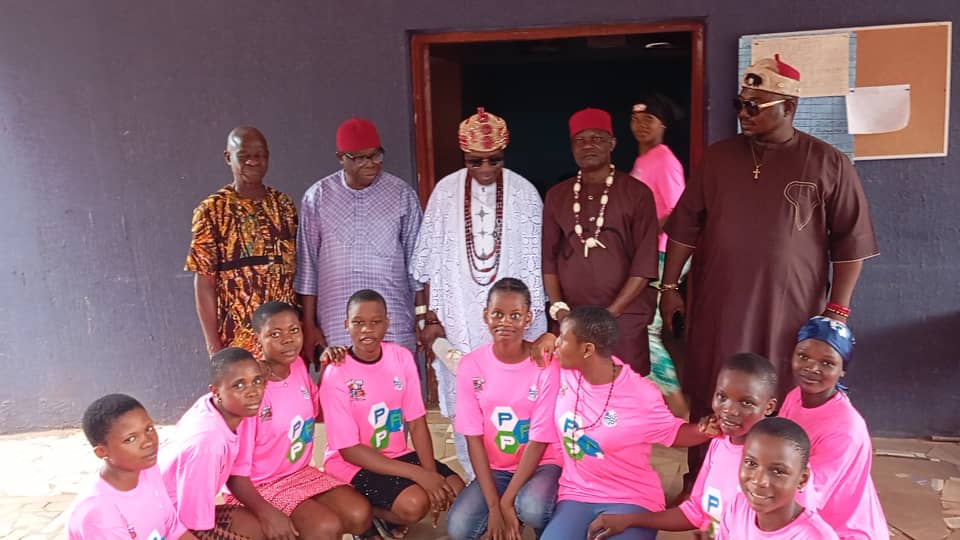
Maiden New Yam Festival celebration, Obinofia Ndiuno
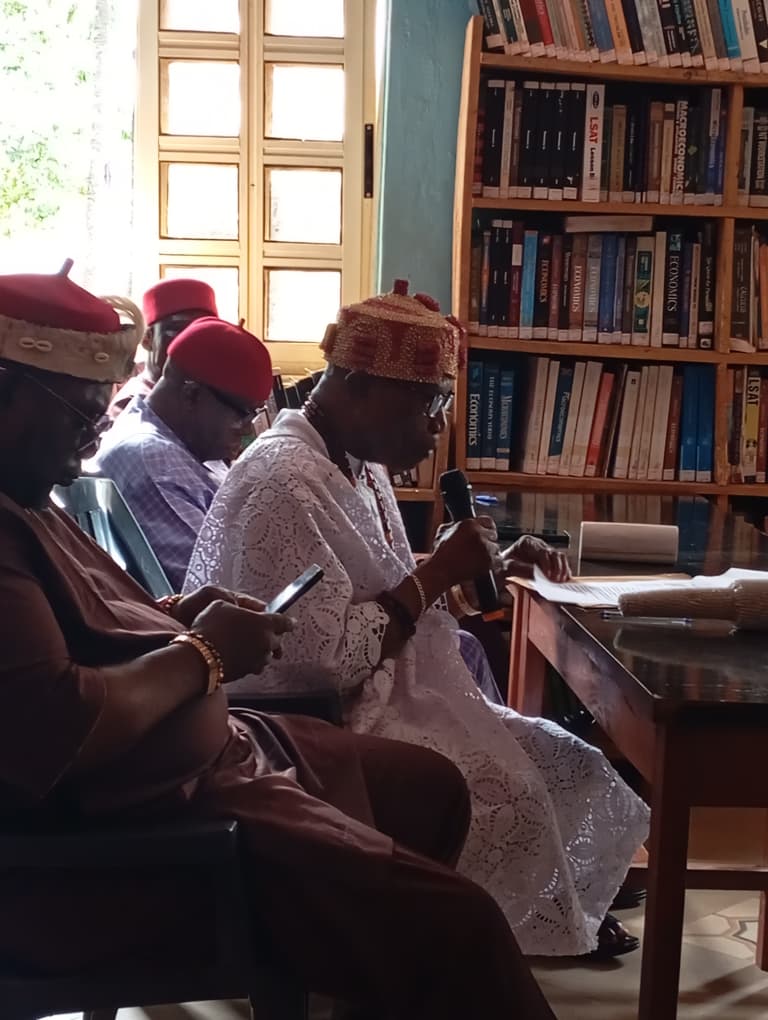
Commemorative photograph of Obinofia Ndiuno men, Inwelle 2026 Boot Camp — not a portrait of Agueze

The Ancestor: Agueze

Agueze was brave, strong, resourceful, adventurous and self-reliant. Following domestic misunderstandings and hostilities in the household, he took to wild life, being gifted in hunting and farming. In search of peace, rest and solace, he traveled far in hunt of game both in the day and at night — like the Biblical Esau, he provided his family with meat.

His father, at the time of partitioning, allocated to him the portion where boundary disputes were anticipated — with neighbours such as the people of Umuaga, Nachi, Ugwuoba and Ebenebe — because as a strong man he could secure the land and protect others against invasion.

Source: Obinofia Ndiuno Historical Archive, Book, pp. 12–13.

Presented as community oral history recorded in the source book — tradition, not scientific fact.

Origin Traditions
◆

More Than One Story

The archive preserves both of the community’s origin traditions rather than choosing one as unquestionable fact.

Tradition One — The Five Sons

A more popular belief among the people is that Agueze (Obinofia) gave birth to five sons of three different mothers: Awo, Ezeaboshi, Ezeagu, Oshie and Onaga. The descendants of these sons form the villages of the community.

Source: Book, p. 13.
Tradition Two — Agueze, Younger Brother

Another belief has it that Agueze was a younger brother to Awo. Where this is the case, Ezeaboshi is the first son of Agu Eze. The two traditions are both preserved here.

Source: Book, pp. 13, 15.
How this community treats the two accounts: In every gathering, the people of Umuawo are called upon to pray before the kola is broken, not minding how young or lowly placed the one may be, in keeping with the seniority tradition.
Early Settlement
◆

From One House to a Covenant of Waters

Initially, the children of Obinofia Agueze lived together in peace and harmony in Imezi (Ihuezi), their ancestral home in Obinofia Ndiuno. They traveled long distances to their land, especially in the boundary with Ugwuoba and Ebenebe, to farm, for security reasons. Ebenebe posed few problems because of the natural boundary of rivers.

For fear of invasion, especially from the people of Ugwuoba, and for convenience, the people decided to divide themselves into two groups. One migrated to the Ugwuoba–Ebenebe end, becoming Obinofia Ndiagu (“those living in the farm”), while the other remained at Obinofia Ndiuno (“those living at home”, i.e. the ancestral home). Every village in Ndiuno is mirrored in Ndiagu. Any people who do not trace their lineage to both areas are strangers and have no Ogonogo ezi (ancestral deity).

Later chapters of the community’s story record a historic epidemic that nearly drove some divisions to extinction, retreats that shaped where villages stand today, and the gradual development of the villages on hills, valleys and level land.

Sources: Book, pp. 14–18.

The book’s earlier chapters (pages 1–11, including any early history, title and author) have not yet been scanned; the account above reflects the scanned portion that begins at page 12.

Development of the Villages
◆

Six Villages, One Community

The scanned archive describes six villages and satellite settlements with their hamlets.

VillageLineageSituationHamlets
UmuawoDescendants of AwoNorthern end; shares boundary with UmumbaOgbaja
UmuezeDescendants of Ezeaboshi (Uka)Hills at the south end; boundary with Oji River Urban and NachiOgugu Umungwoli, Amaeke (Ugwuakulu, Umuobo)
UmuezeaguDescendants of Ezeagu (Uka)North-eastern endOgbagu, Ishieke, Umuojo
OkposhiDescendants of OshieLevel land; gateway on the expressway roadUmu Otiligwo, Izuogu
UmuonagaDescendants of OnagaWestern end, extending to NdiaguAmaogbu, Umuokeyi, Umuogakwu, Okamkpam, Onuobodoyi, Ozom, Ihuezi, Umuagulu
Obinofia NdiaguDivided communityUgwuoba–Ebenebe end (“those in the farm”)Mirrors Ndiuno villages

Historical & Cultural Identity

Obinofia Ndiuno is known as peaceful, hospitable, caring and loving, especially to strangers. It maintains cordial relations with its neighbouring communities of Umana, Umumba, Aguoba (Aguobia) and Obinofia Ndiagu, with which it shares common boundaries, ancestral identity and origin. The communities attend one common market — Orie Owere, now Nkwo Ezeagu — and share festivals and customs such as masquerade, marriage, new yam, burial and Ozo title taking, with slight variations.

The community’s identity is carried in its spoken word: proverbs such as “Umunna bu Ike” (one’s true strength lies in kinship), “the words of the elders are words of wisdom”, and its day-naming culture that gives children names from the four Igbo market days — Nkwo, Eke, Orie and Afo.

Sources: Book, pp. 28–29, 49, 53, 71–72.

The community describes its history as spanning “Over 2,000 Years of History”. The scanned source book contains this claim in its opening material; specific dates found in the book are marked alongside the events they belong to.

Photograph of community members at the Inwelle 2026 Boot Camp, Amorji Nike, Enugu State
Media note: No historical photographs exist from the ancient period. Modern community photographs from published events are shown; individual identities are not attributed until they are confirmed by the community.